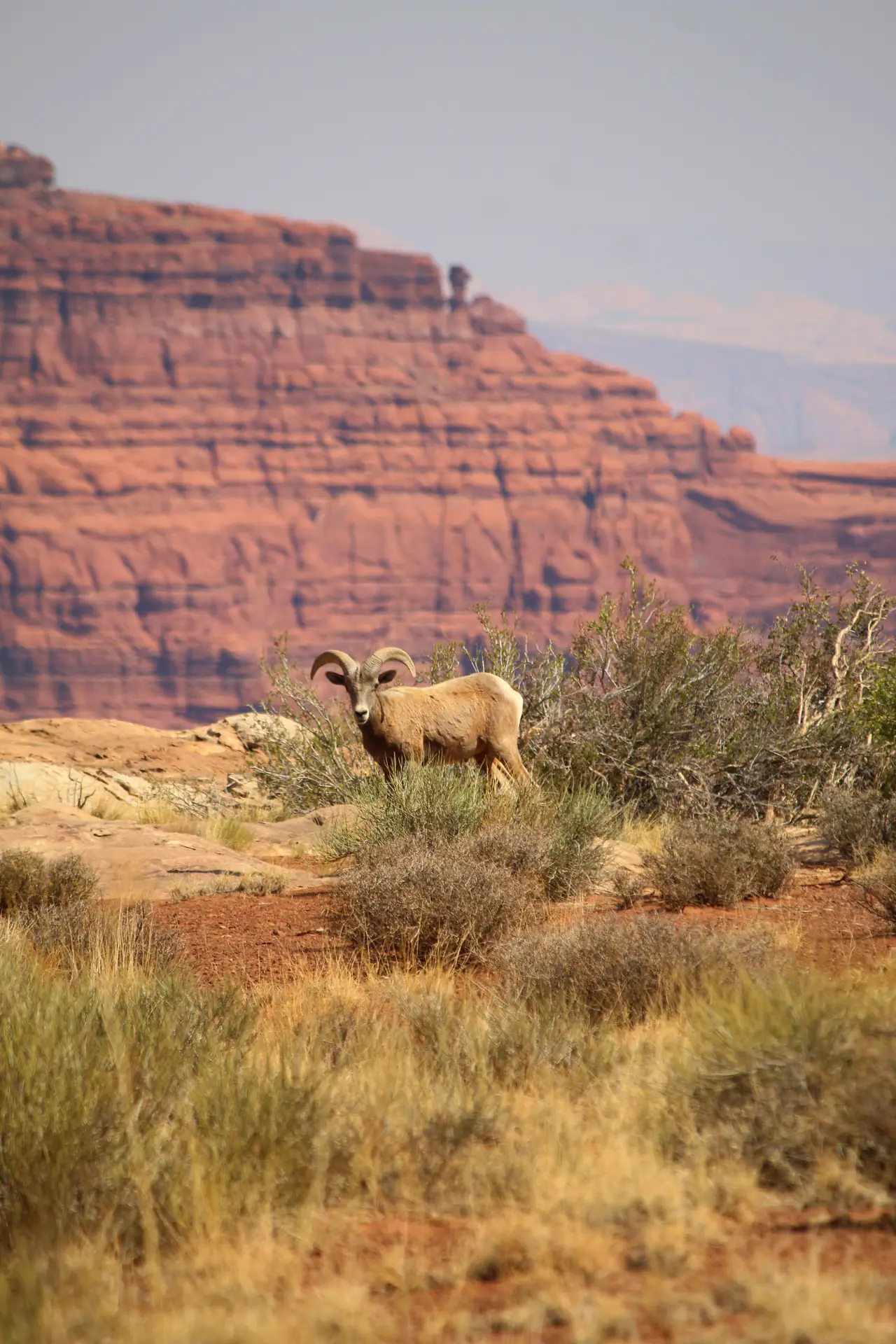
Photo: NPS · public domain
- Hunts tracked
- 4
- Season
- 2020
Top hunts by draw odds
- Overall draw rate
- The share of applicants the agency's report counts who drew the hunt: every choice it prints applicants for, first choices only, or authorized permits per first and second choices, as the row says. It is not your chance of drawing.
| Hunt | GMUs | Overall draw rate | Filled their tag | Opportunity | Year |
|---|---|---|---|---|---|
| BHS-1-202 | 45495053 | about 1 in 7 drew, 14% | — | — | 2020 |
| BHS-2-203 | 45495053 | about 1 in 25 drew, 4.2% | — | — | 2019 |
| BHS-1-204 | 131719202627 | fewer than 1 in 100 drew, 0.5% | — | — | 2019 |
| BHS-1-201 | 16B222324454950535558 | fewer than 1 in 100 drew, 0.4% | — | — | 2020 |
Units
Bighorn Sheep in New Mexico
New Mexico offers both Rocky Mountain bighorn and desert bighorn sheep, and its lifetime rule is distinctive: a hunter is eligible to draw one Rocky Mountain bighorn ram license and one desert bighorn ram license in a lifetime. Holding one does not bar the other — a hunter who has taken a desert ram may still apply for a Rocky Mountain ram, and vice versa. Youth hunters have parallel one-time eligibility for youth-only ram licenses, and ewe hunts provide additional opportunity in the Pecos herd.
Because there are no bonus or preference points anywhere in New Mexico's draw, a bighorn application is the same long-shot lottery every year: random sequence numbers, choices examined in order, and the standard quota split (a minimum of 84 percent resident, 10 percent outfitter-sponsored, 6 percent non-outfitted nonresident). Bighorn applications are single-hunter only — no partners on one application — and an applicant may choose up to three bighorn hunt codes, with desert and Rocky Mountain choices required to be on the same application.
Rocky Mountain ram and ewe hunts run in the state's northern and western mountain herds — hunt areas include the Pecos, Wheeler Peak, Latir, Rio Grande Gorge and Jemez country, among others — while desert bighorn hunts cover southern desert ranges such as the Ladrones, Caballos, Hatchets, Peloncillos, the San Andres (accessed through White Sands Missile Range, with its access fee and military scheduling caveats) and the Fra Cristobals, where hunts occur on private land only. Every ram taken in New Mexico must have a seal inserted in one horn by the Department within ten days of harvest or before leaving the state, whichever comes first.
The tables on this page show the draw history for each bighorn hunt code by residency class. With license counts this small, treat any odds figure as a published rate with wide uncertainty — the data describes the past, not your draw.
Every draw-rate, success-rate and opportunity-score figure here is read from published reports — a guide to relative opportunity, never a guarantee of a tag or a harvest. Figures cover seasons through 2020; data last refreshed Nov 3, 2026. Source: New Mexico Department of Wildlife. Odds & Antlers is an independent product, not affiliated with or endorsed by it.